
Do You Have to Keep the Black Finish After Laser Engraving?
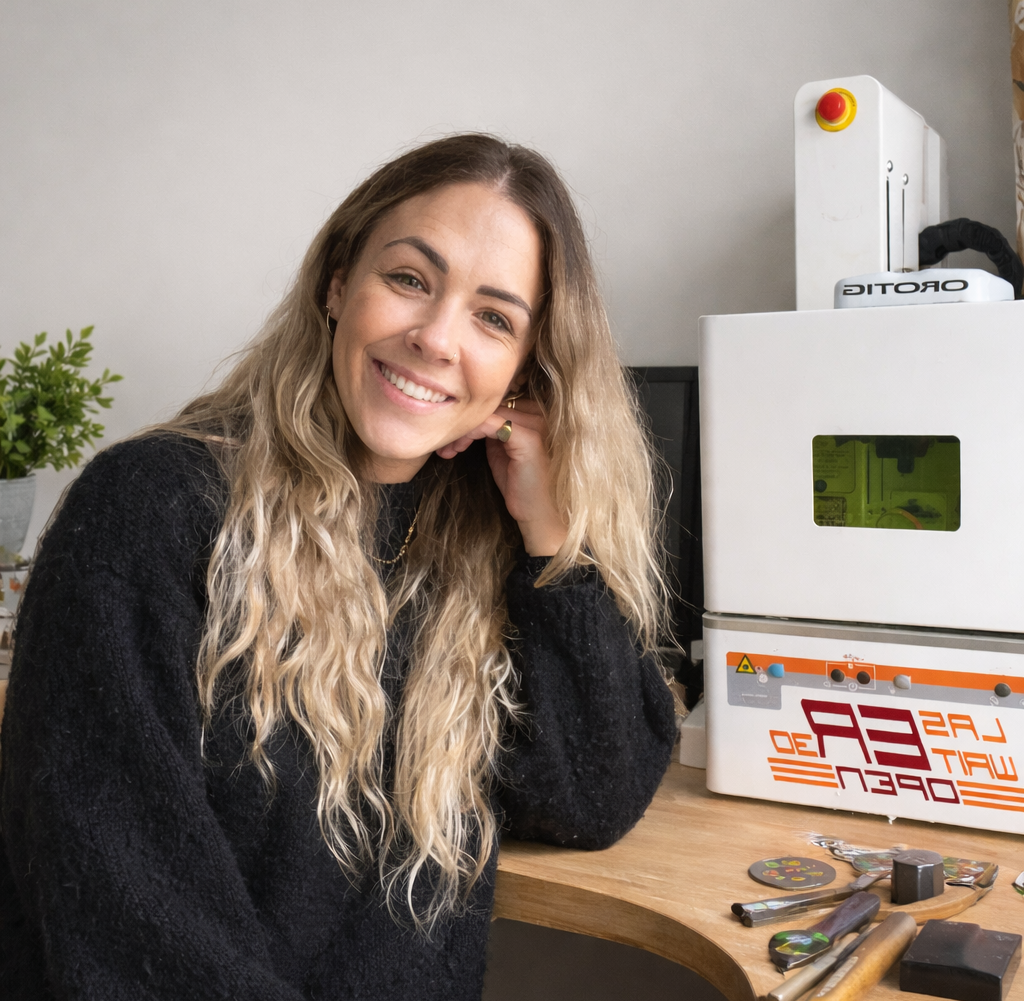
Laser engraving often leaves behind a dark or black finish, especially on metals like silver, gold, stainless steel, and brass.
One of the questions I get asked a lot is: “Do I have to keep the black?”
The honest answer is… not always.

Why Does Laser Engraving Leave a Black Finish?
When the laser engraves into metal, it creates heat, residue, and oxidation on the surface.
This darker finish can:
Make details stand out more
Add contrast
Help fingerprints and handwriting show clearly
Create a bolder overall look
For some designs, it works really well.
Can the Black Finish Be Removed?
Yes, in many cases it can.
Depending on:
The type of metal
How deep the engraving is
The level of detail
The final look you want
The black can often be reduced or removed through:
Steel brushing
Sanding
Polishing
Tumbling
What Happens When You Remove It?
Removing the black gives the piece a:
Cleaner look
Softer finish
More subtle detail
More natural metal appearance
A Few Things to Keep in Mind
Fine detail can soften
If a design is very detailed, removing the black may reduce some contrast.
Deeper engraving usually works better
A deeper engraving often holds detail better after polishing.
Every metal behaves differently
Some metals polish up better than others.
Black Finish vs Clean Metal Finish
Black Finish
Bold
High contrast
More traditional laser look
Strong detail visibility
Clean Metal Finish
Softer
More subtle
Cleaner
Often feels more premium
My Honest Advice
If you are getting something engraved and know you would prefer the black finish removed, make sure the design is set up properly from the start.
Things like depth, detail, metal type, and layout all make a difference to how well the final piece will polish up.
Some designs suit a clean polished finish beautifully, while others may need that darker contrast to really show the detail properly.
It is always worth discussing the finish before engraving begins, rather than trying to change it afterward.


Comments